Modern Data StackLesson 34
Migration from Airflow 2 to Airflow 3
Airflow 3 is a major release with breaking changes. This note covers the key differences and what to update.
What's New in Airflow 3
| Area | Change |
|---|---|
| DAG Versioning | Airflow tracks DAG versions — old runs show old code |
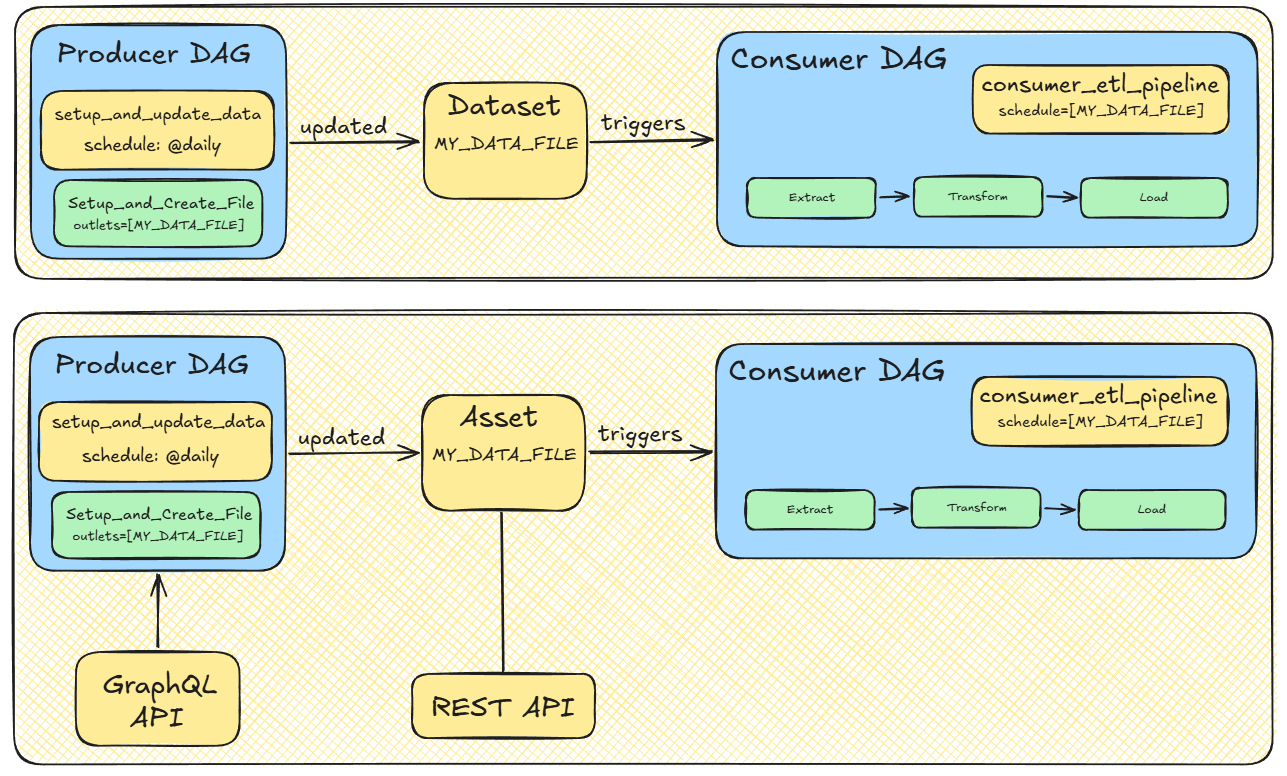
| Asset-Driven Scheduling | DAGs can trigger based on data, not just time |
| Backfill UI | Run backfills directly from the UI |
| New UI | Completely redesigned interface |
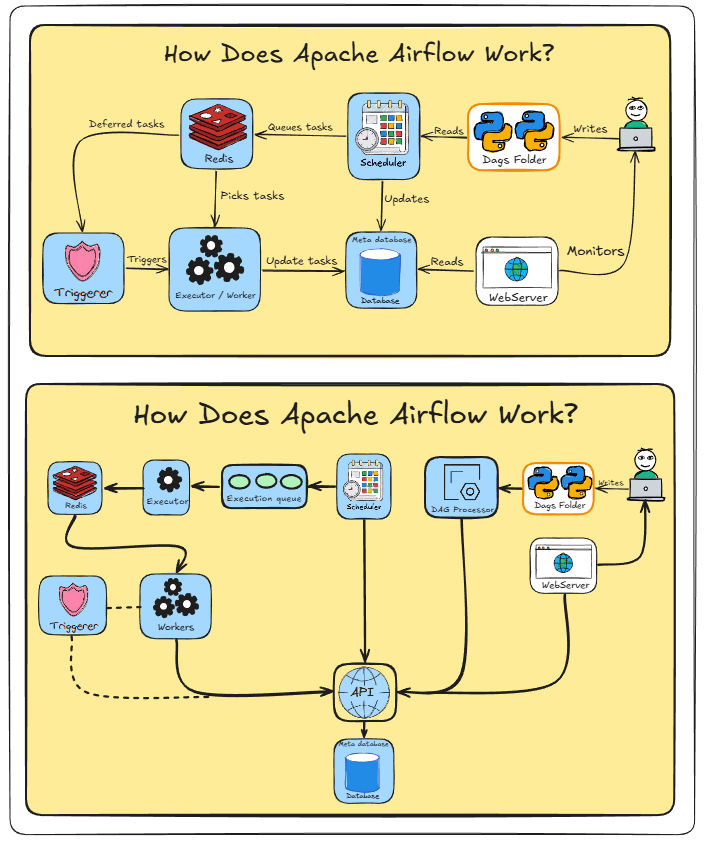
| Task Execution API | Workers communicate via API, not DB |
| DAG Processor | Separate process — no longer part of Scheduler |
| Python Support | Minimum Python 3.9 |
Breaking Changes
1. Removed schedule_interval — use schedule
# ❌ Airflow 2
with DAG(
    dag_id='my_dag',
    schedule_interval='@daily',
    ...
) as dag:
    pass

#===========================================================================

# ✅ Airflow 3
with DAG(
    dag_id='my_dag',
    schedule='@daily',
    ...
) as dag:
    pass
2. start_date moved out of default_args
# ❌ Airflow 2 — start_date in default_args
default_args = {
    'owner': 'airflow',
    'start_date': datetime(2024, 1, 1),
}

with DAG(dag_id='my_dag', default_args=default_args) as dag:
    pass

#===========================================================================

# ✅ Airflow 3 — start_date directly in DAG
default_args = {
    'owner': 'airflow',
}

with DAG(
    dag_id='my_dag',
    start_date=datetime(2024, 1, 1),
    default_args=default_args,
) as dag:
    pass
3. execution_date replaced by logical_date
# ❌ Airflow 2
def my_task(**context):
    date = context['execution_date']
    ds   = context['ds']

#===========================================================================

# ✅ Airflow 3
def my_task(**context):
    date = context['logical_date']
    ds   = context['ds']
4. PostgresOperator import changed
# ❌ Airflow 2
from airflow.operators.postgres_operator import PostgresOperator

#===========================================================================

# ✅ Airflow 3
from airflow.providers.postgres.operators.postgres import PostgresOperator
5. provide_context removed from PythonOperator
# ❌ Airflow 2
task = PythonOperator(
    task_id='my_task',
    python_callable=my_func,
    provide_context=True,         # needed in Airflow 2
)

#===========================================================================

# ✅ Airflow 3 — context is always passed via **context
task = PythonOperator(
    task_id='my_task',
    python_callable=my_func,      # just add **context to the function
)
6. Replace Dataset with Asset
In Airflow 3, the concept of Datasets has been renamed to Assets. This change reflects a broader scope, as an "Asset" can represent a table, a file, or even an ML model.
# ❌ Airflow 2
from airflow.datasets import Dataset
my_data = Dataset("s3://bucket/file.csv")

# ✅ Airflow 3
from airflow.assets import Asset
my_data = Asset("s3://bucket/file.csv")
7. Task Execution API (Architectural Shift)
A major change for DevOps and Infrastructure: In Airflow 3, Workers no longer communicate directly with the Meta Database. Instead, they communicate via a dedicated Task Execution API.
- Benefit: Enhanced security and easier scaling of workers in environments like Kubernetes.
9. DAG Processor Separation
The DAG Processor is now a completely separate process from the Scheduler.
- Why it matters: If a DAG has heavy parsing logic or an infinite loop, it will only affect the DAG Processor, ensuring the Scheduler remains stable and continues to trigger other tasks.